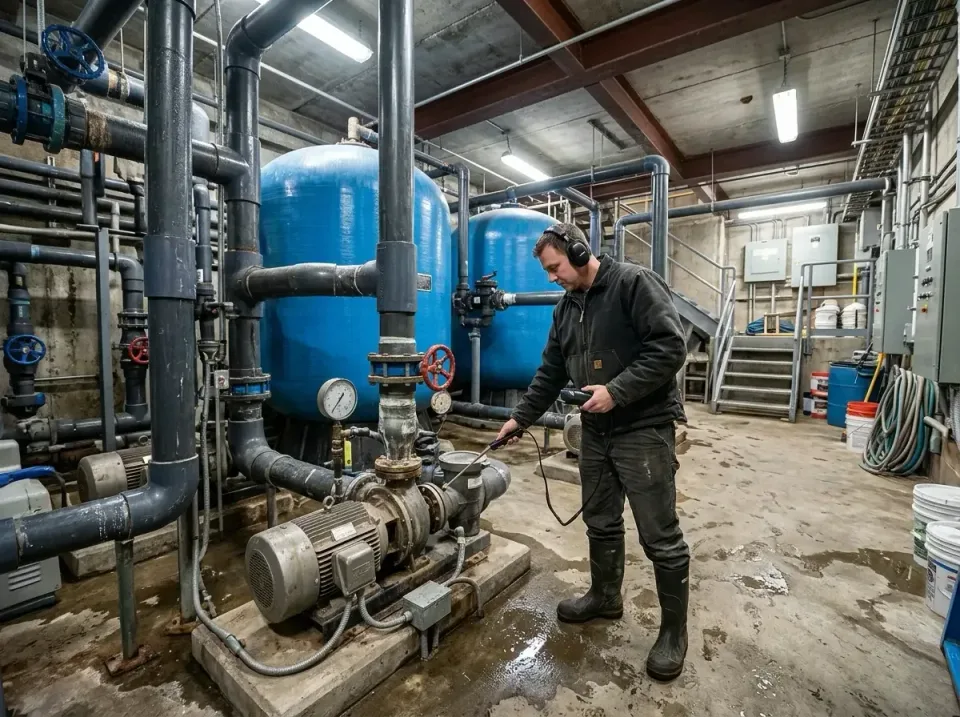
Water Pressure Tank Repair
We repair potable-water pressure tanks for homes, checking tank size and connections; replacement commonly runs $800–$2,500, driven by tank size and installation access.
When a well pump cycles repeatedly, ask the repair company how it will identify the cause before recommending replacement. A pressure diagnosis should distinguish a pump problem from a control or tank issue; request the readings and findings in plain language.
Work near the Alaska Highway can involve longer travel planning, so clarify whether that affects the estimate before booking. If you live near the Alaska Native Heritage Center, mention your location and the symptoms when you call; clear details help the crew prepare.
For homes near the Alaska SeaLife Center, ask how the team protects equipment and the work area during service. Choose a company that explains its steps, scope, and next decision before work begins.
A weak upstairs shower or a washer that fills unusually slowly is a reason to ask for measurements, not a guess. Ask the technician to compare pressure readings and explain what the results indicate before proposing parts. We have seen a pressure complaint traced to a control issue rather than a failed pump; the distinction matters because replacement without diagnosis can leave the original problem in place.
Ask whether the estimate covers testing, travel, and access to the equipment. A useful quote identifies what was checked, what was found, and what remains uncertain. We have served Alaska for more than 11 years, and our process starts by inspecting the system and explaining the cause in plain language.
Ask how the crew plans around your home’s location and season. Interior Alaska’s extreme winter cold makes it important to discuss exposed equipment and whether access is safe before a service visit.
For a home in Southeast Alaska’s maritime, rainy climate, ask how the team protects the work area and electrical components from wet conditions. These are practical questions, not a reason to assume every pressure problem is weather-related.
Travel and timing can also shape a job. If your property is near the University of Alaska Fairbanks, ask whether the crew needs specific directions or equipment access cleared ahead of time.
Near the Anchorage Alaska Railroad Depot, explain whether the pump controls are in a crawlspace, utility room, or separate outbuilding so the estimate reflects the actual work. Summer temperatures vary widely across Alaska, so describe current site conditions rather than assuming a season means easy access.
Ask for the proposed repair, parts, labor, and exclusions in writing. If a company recommends a pressure switch replacement, ask what test showed the switch was faulty and whether wiring access changes the scope. That is a reference point, not a quote for every home.
A repair company should also explain what happens if inspection uncovers another fault. The Alaska State Capitol is a useful reminder that Alaska service conditions span very different communities; make sure an estimate addresses your actual location and access rather than assuming a standard city job. Get the scope before work starts.
You can safely record symptoms and note when they occur: during a shower, when another fixture runs, or after a power outage. Share those observations and any pressure readings you already have. Do not open electrical pump controls or alter settings to test a theory; a mistake can damage equipment or create a hazard.
Call a qualified professional when the pump will not run, cycles repeatedly, or pressure drops across several fixtures. Western Alaska coastal storms can disrupt service access, so ask about scheduling and any preparation needed at your site rather than relying on an assumed arrival window.
Our crew checks the pressure system, explains the findings, and recommends a repair suited to the property. For a related symptom, see our guide to well pump cycling and possible pressure tank causes.
The right repair depends on what testing finds; ask the company to connect its recommendation to your specific symptom. Long winters increase frozen-pipe and well-system risks, so include seasonal access and exposed equipment in the discussion.
A home near Anchorage 5th Avenue Mall may have different travel and access needs than one near Chena Hot Springs; confirm those details before accepting a quote. Interior summers can bring warm days and cool nights, another reason to describe actual site conditions instead of relying on a seasonal assumption.
| Option | Best for | Key detail |
|---|---|---|
| Pressure switch replacement | Pump control not responding correctly | Common settings include 20/40 or 30/50 psi; ask what readings support replacement. |
| Pressure tank inspection | Short cycling or unstable delivery | Residential tanks range from 20–86 gallons; storage capacity is not the same as drawdown. |
| Booster pump troubleshooting | Pressure remains inadequate after diagnosis | Booster pumps are sized by flow and pressure, not by guesswork. |
| Frozen line assessment | Affected flow after freezing conditions | Ask how the crew will check accessible piping before proposing a repair. |
Ask for test results and a written scope before choosing.
A little preparation helps the technician reach the equipment and assess the problem without avoidable delays. Freeze-thaw cycles stress buried pipes and foundations, so note any recent changes in drainage, ground conditions, or pressure.
If you are near the Anchorage Museum, mention access constraints when arranging service; a short description can help the crew plan tools and entry. Eagle River Nature Center is a reminder that some service locations require more advance planning than an easy urban arrival. Use these steps:
Describe the symptom: Note which fixtures are affected and whether pressure changes during use.
Locate equipment: Identify the wellhead, pressure tank, shutoff, and route to the utility room.
Clear the work area: Move stored items away from pump controls and leave the electrical panel accessible.
Prepare for winter access: Clear snow around the wellhead and keep the equipment route safe.
Plan for interruption: Ask how long water may be unavailable and protect floors along the route.
Confirm the findings: Before authorizing extra work, ask the technician to show what the inspection revealed.
Heavy snowfall can block outdoor equipment, so tell the company about the wellhead access before scheduling and ask what clearing is needed. Clear a safe route when possible, but do not climb onto unstable snowbanks or disturb electrical equipment.
No, avoid opening pump controls or changing pressure settings; repeated cycling can have several causes that require testing. North Slope communities face permafrost and severe cold, so tell the technician about site conditions and let a qualified professional assess the equipment.
Some alterations may require Anchorage plumbing permits, and Anchorage electrical permits may apply to pump wiring; verify requirements before work begins. Ask about Alaska Statutes 08.18 contractor registration requirements and the applicable Alaska Plumbing Code provisions.
Yes, spring thaw can expose shifting or damaged water lines, so report new wet areas, changing pressure, or an unexplained loss of flow. In communities such as Ketchikan, substantial rainfall can make site drainage worth discussing during the inspection.
Before hiring, look for a company that measures first, explains the evidence, and gives you a clear scope before replacing equipment. Coastal humidity and salt air accelerate corrosion, so ask whether exposed fittings and connections were checked if your property is near the coast.
If strong winds have affected exposed plumbing near Prudhoe Bay, mention that history during the assessment so it can be considered alongside pressure readings. The Matanuska Glacier area is a reminder that Alaska homes span different settings; a repair plan should account for your site, not assume one standard condition.
Weak flow, fading pressure, or repeated pump cycling deserve a measured diagnosis. For practical next steps, contact Alaska Plumbing Pros at (877) 773-0781 or review our well pump repair service. We will inspect the pressure system, explain what is causing the problem, and recommend a repair suited to your home and Alaska’s conditions.
Heavy snowfall can block outdoor equipment, so tell the company about the wellhead access before scheduling and ask what clearing is needed. Clear a safe route when possible, but do not climb onto unstable snowbanks or disturb electrical equipment.
No, avoid opening pump controls or changing pressure settings; repeated cycling can have several causes that require testing. North Slope communities face permafrost and severe cold, so tell the technician about site conditions and let a qualified professional assess the equipment.
Some alterations may require Anchorage plumbing permits, and Anchorage electrical permits may apply to pump wiring; verify requirements before work begins. Ask about Alaska Statutes 08.18 contractor registration requirements and the applicable Alaska Plumbing Code provisions.
Yes, spring thaw can expose shifting or damaged water lines, so report new wet areas, changing pressure, or an unexplained loss of flow. In communities such as Ketchikan, substantial rainfall can make site drainage worth discussing during the inspection.
Browse all nationwide service options and choose the right fit for your project.
We repair potable-water pressure tanks for homes, checking tank size and connections; replacement commonly runs $800–$2,500, driven by tank size and installation access.
Booster Pump Repair covers pump diagnostics and component fixes for homes with inconsistent supply; typical repairs run $300–$1,200, depending on parts and diagnostics.
Well Pump Repair covers pump testing and repairs for homes, with replacement costs of $1,200–$4,500 depending on pump depth and type.
We repair leaking water lines for homeowners and contractors, including accessible pipe sections and excavation; repairs commonly run $400–$3,000 depending on pipe access.
Frozen Pipe Repair for Alaska homes includes locating and safely thawing frozen pipe sections; access, pipe material, and any split line affect the job scope.
We repair residential pressure regulators, checking valve condition and system readings; access and regulator size shape the job, typically $150–$400.
We diagnose sudden household pressure drops, testing flowing and static readings and system controls. Typical diagnostic visits run $100–$300, depending on testing and travel.
We repair or replace household shutoff valves, including accessible copper and PEX connections; typical jobs run $150–$500 depending on access and valve condition.
Clear clogged residential water lines and inspect accessible pipe sections; typical jobs run $250–$1,500, with price driven by blockage and access.
We repair well pressure switches for homeowners, including switch and wiring access; typical replacement runs $200–$600, depending on access.
Goulds Well Pump Repair covers residential pump diagnosis and component repairs; access, pump depth, and parts availability shape the job cost.
We repair residential water softeners, including control and resin-bed issues; diagnostic work is $100–$300, depending on testing and travel.
Shallow Well Pump Repair covers pump, foot-valve, and check-valve faults for private-well homes; access, pump type, and well depth shape the job cost.
Sediment Filter Replacement clears packed grit from residential filter housings; typical cartridge jobs run $150–$450, depending on filter size and access.
Air-in-line diagnosis and repair for Alaska homes, including accessible water-line checks; typical service runs $150–$500, depending on access and repair scope.
Submersible pump repair for Alaska homes includes well-depth and pump checks; replacement work typically runs $1,200–$4,500, depending on depth and pump type.
Grundfos Booster Pump Repair in Alaska: diagnose pump faults, inspect controls, and repair components. Call (877) 773-0781 for a scope review.
Select a city to find local low water pressure repair providers we cover in Alaska.
Share your job scope for low water pressure repair in Alaska — we will review fit and pricing before scheduling.